


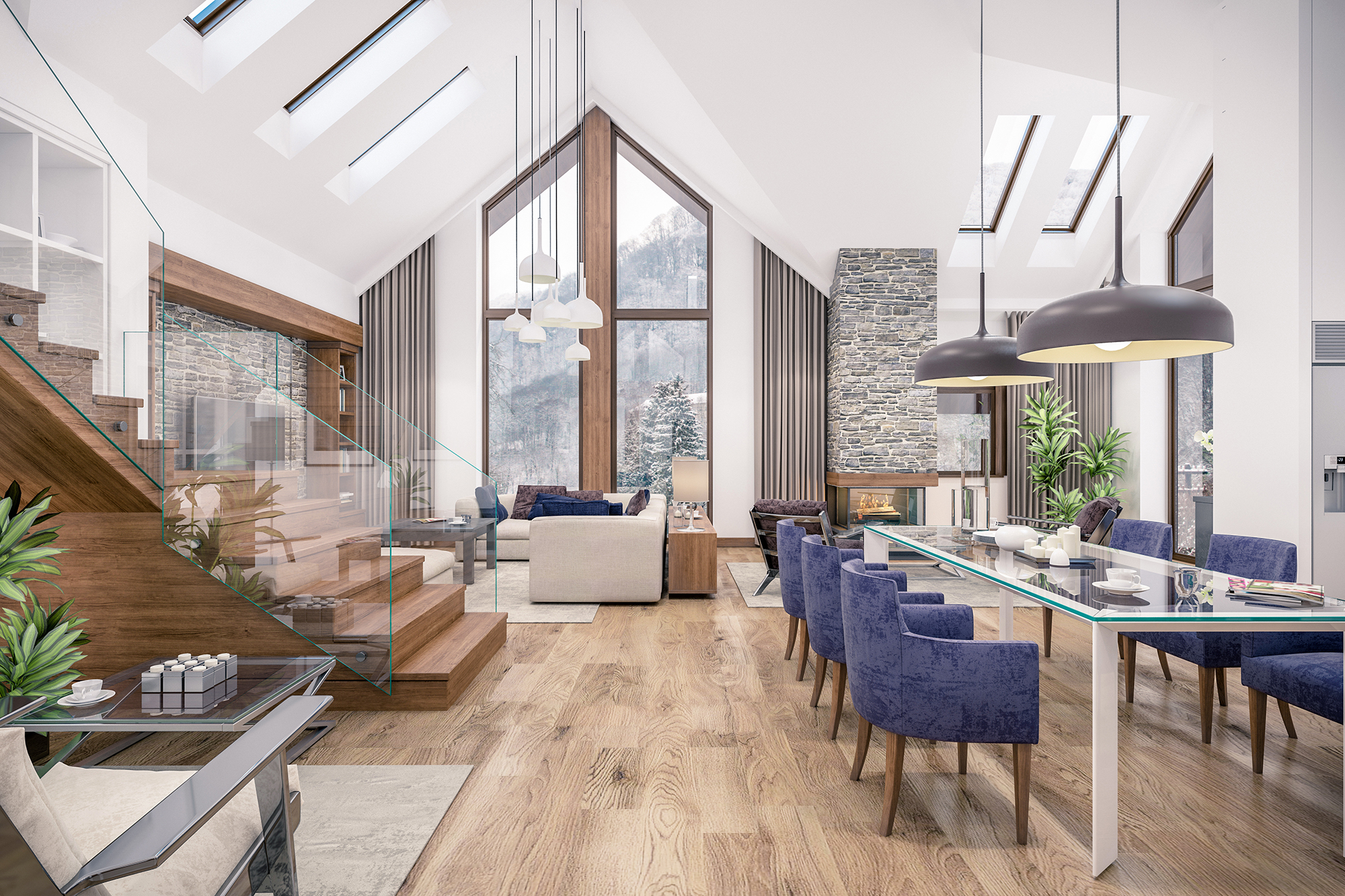
Wide-plank vinyl (7 inches and wider) has a calm, modern look that makes rooms feel bigger. But bigger boards behave like bigger levers: they amplify subfloor imperfections, humidity swings, and heat exposure. In the Denver market, that usually shows up as seasonal gapping, edge-peaking, or seam stress. Here’s the technical playbook to prevent those issues before you spend money twice. Denver Carpet & Hardwood can help you select the right wide-plank vinyl and install system for your home’s conditions across Denver and surrounding communities.
1) The “cupping” confusion: what you’re really seeing in LVP
True cupping is a wood term, but with wide LVP people use it to describe three different issues:
Edge-peaking (most common): plank edges sit slightly higher than the center. Often caused by uneven subfloor, a compressed underlayment, or a locking system under stress.
Tenting/peaking at seams: boards push against each other because expansion space is restricted, usually near walls, heavy cabinets, or tight transitions.
Telegraphing: subfloor ridges or patch lines show through, especially on thinner products or softer cores.
Wide planks amplify all three because the board spans more surface area, so tiny height differences and movement forces become more visible.
2) When wide planks gap in Denver (and why it’s not always “bad install”)
Gapping is normal in floating floors to a degree, but noticeable gaps signal either humidity swing or joint stress.
Common Denver triggers:
Indoor RH dropping below ~30% in winter: floating floors shrink slightly; click joints can show hairline gaps.
Long runs without breaks: the longer the continuous span, the more cumulative movement you get.
Weak locking profile + longer boards: long/wide planks put more leverage on joints, especially in open concepts.
Prevention targets (practical, technical):
Maintain 35–55% indoor RH where possible (humidifier in winter helps).
Prefer wide-plank products with a strong angle-angle locking system and good joint geometry (not just “drop-lock”).
In large spaces, plan strategic transition breaks when manufacturer specs call for it (often around 40–60 linear feet, varies by brand).
3) The specs that matter for 7"+ vinyl (not the marketing buzzwords)
If you’re choosing wide plank, prioritize these specs:
Core type and stiffness:
SPC (stone polymer composite) is stiffer and resists denting, but can feel harder underfoot.
WPC is slightly softer and warmer, but can dent more with heavy point loads.
Total thickness: for wide planks, 5–6.5mm (including attached pad) is typically more stable than ultra-thin options in real homes.
Wear layer: for Denver households with pets, kids, or gritty entryways, 20 mil is often the “sleep-easy” choice; 12 mil can be fine for lighter wear if mats and maintenance are solid.
Plank length: super-long boards look high-end, but increase joint stress. If your space is large and sunny, avoid extremes unless the product is engineered for it.
4) Subfloor flatness: the #1 reason wide planks fail early
Wide planks demand better subfloor prep because the board can bridge high/low spots and then flex at the joints.
General floating-floor tolerance to aim for:
No more than 3/16" variation over 10 feet (and ideally tighter for wide/long boards).
If your slab is wavy or your OSB seams are proud, you’ll get edge-peaking, bounce, and joint separation over time.
Best practices:
On concrete: grind highs, patch lows, and use appropriate leveling compounds where needed.
On wood subfloors: screw-down to eliminate movement, address squeaks, and feather seams with a skim coat where appropriate.
5) Expansion gaps and “locked-in” edges: the silent warranty killers
Most wide-plank problems in Denver happen because the floor can’t move as designed.
Avoid these common mistakes:
Tight baseboards with no true expansion space (quarter round is cosmetic; you still need the gap).
Heavy islands/cabinets installed on top of a floating floor unless the product allows it.
Door jambs not undercut properly, pinching the floor.
Hard transitions that “trap” the floor in one direction.
6) Sun and heat: Denver’s high-altitude wild card
Direct sun can warm floors unevenly, increasing expansion stress. In big south-facing rooms, consider:
Window coverings during peak sun
Lighter/matte finishes to hide micro-scratches and reduce glare
Products tested for dimensional stability and approved for larger spans
Wide-plank vinyl can be absolutely worth it in Denver, but it has to be treated like a system: product specs, subfloor tolerances, expansion planning, humidity control, and sun exposure all work together. If you want help selecting a 7"+ vinyl that matches your home’s conditions and lifestyle, contact us to schedule a measurement and product consult.
We serve Arvada, Aurora, Bennett, Boulder, Brighton, Broomfield, Castle Rock, Centennial, Commerce City, Denver, Erie, Firestone, Glendale, Golden, Highlands Ranch, Lafayette, Lakewood, Littleton, Lone Tree, Longmont, Louisville, Northglenn, Strasburg, Superior, Thornton, and Westminster.


